

Poster Printing for Events That Gets Seen
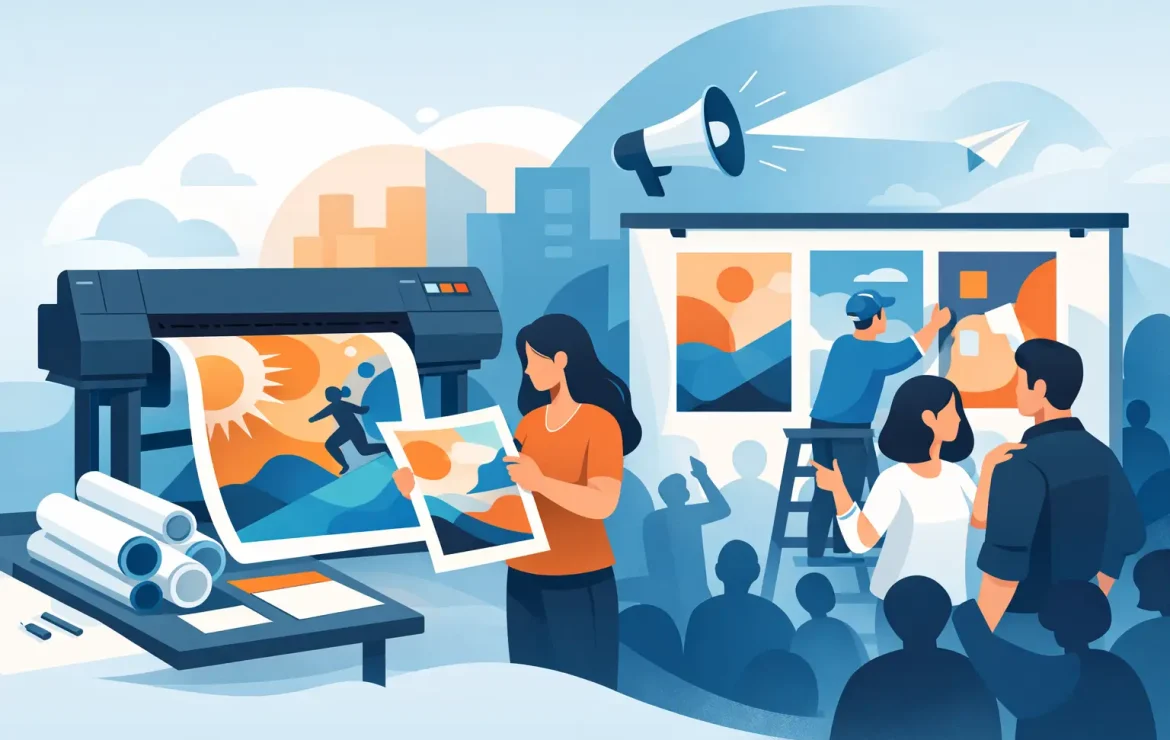
A poster has a tough job at an event. It might need to stop people in a busy exhibition hall, guide visitors through a venue, promote a limited-time offer or make a brand look polished from the moment someone walks in. That is why poster printing for events is not just about putting artwork on paper. It is about choosing the right format, finish and message for the space you are working in.
For marketing teams, organisers and business owners, the challenge is usually the same. You need posters that look sharp, arrive on time and do their job without creating extra admin. The good news is that getting there is usually more straightforward than people expect, as long as a few practical decisions are made early.
What good poster printing for events actually needs to do
A successful event poster is not judged at arm’s length on a screen. It is judged in real conditions, often quickly. People are walking past, lighting is inconsistent, distances vary and attention spans are short. If the poster is hard to read, too small for the setting or printed on the wrong stock, the design can be perfectly good and still underperform.
That is why the first question is not usually which paper to choose. It is what the poster needs to achieve. A poster announcing a keynote speaker has different demands from one used as wayfinding signage. A retail promotion at a public event needs sales energy, while a corporate conference poster may need a more refined look. The purpose drives the print choice.
There is also a clear difference between posters that need to persuade and posters that need to inform. Promotional posters tend to rely on strong visual hierarchy, bold colour and quick impact. Informational posters need clarity first – readable type, sensible spacing and a layout that still works when someone sees it from several metres away.
Choosing the right poster size for the venue
Size is one of the most important decisions, and one of the easiest to underestimate. Many event posters fail simply because they are too small for where they are placed. If the venue is large, ceilings are high or footfall is heavy, a compact poster can disappear into the background.
For close-range messaging, smaller formats can work well. These are useful near reception desks, on counters or in breakout spaces where people have time to stop and read. For corridors, entrances and exhibition areas, larger posters usually make more sense because they create presence and remain legible from further away.
This is where context matters. An elegant design on an A4 or A3 poster may suit an intimate venue or internal event, but a public-facing exhibition often benefits from bigger formats that hold their own visually. If you are unsure, it is often better to prioritise visibility over restraint. Most businesses regret going too small more often than going too large.
Paper, finish and durability
The paper stock and finish affect more than appearance. They influence how professional the poster feels, how colours reproduce and how well it stands up during the event itself.
Gloss finishes can make colours look vibrant and eye-catching, which suits promotional graphics and bold branding. The trade-off is glare. In brightly lit venues or near windows, reflections can make text harder to read. Matt finishes reduce this issue and often feel more refined, which makes them a strong choice for corporate events, gallery-style displays and information-led posters.
Weight matters too. A lightweight poster may be fine for short-term indoor use, especially if mounted properly. If it is going into a busy environment, travelling between venues or being handled by multiple people, a sturdier stock can be worth it. It helps the poster look crisp for longer and reduces the risk of edge damage, creasing or curling.
For some events, especially those with repeated use, it can make sense to think beyond standard paper. If posters are likely to be reused across several dates or locations, durability becomes more important than lowest upfront cost.
Design choices that make posters work harder
A lot of event poster design comes down to restraint. Teams often want to fit everything in – logos, schedules, sponsor names, offers, QR codes, contact details and multiple messages competing at once. The result is usually a poster that asks too much of the viewer.
The best posters lead the eye clearly. They have one main message, one obvious focal point and a hierarchy that makes sense in seconds. If the event name, date or call to action matters most, that information should not be hidden in the middle of a crowded layout.
Text size is another common issue. What feels readable on a laptop can become tiny on a wall. Event posters need type that works at distance, not just close up. Strong contrast also matters. Pale text on a light background may look stylish on screen but often loses impact in real venues.
Images need equal care. Low-resolution artwork can ruin an otherwise strong poster once it is printed at scale. If the poster includes photography or detailed graphics, the source files need to be suitable for the final size. This is one reason it helps to work with a printer that can flag issues before production rather than simply running the file and hoping for the best.
Poster printing for events with tight timescales
Deadlines are part of event life. Venues change, branding updates happen, speakers are confirmed late and campaign messages shift closer to launch than anyone would like. That does not mean quality should be sacrificed, but it does mean the process needs to be efficient.
The simplest way to keep things on track is to finalise the practical details early. Poster size, quantity, artwork approval and delivery timing all affect how smoothly the job runs. Small changes made late can create avoidable pressure, especially if multiple print items are being produced together, such as posters, roller banners, leaflets and presentation materials.
It also helps to think in terms of the full event pack rather than a single item in isolation. Posters rarely sit alone. They work alongside banners, handouts, signage and branded display materials. When those pieces are produced with consistency in mind, the event looks more joined up and more credible.
For many businesses, that joined-up approach is just as valuable as the print itself. It removes the need to manage separate suppliers, chase specifications or translate design ideas into print language.
When cheap poster printing becomes expensive
Every event has a budget, and sensible cost control matters. But poster printing is one of those areas where cheap choices can create expensive problems. Poor colour reproduction can weaken brand presentation. Thin stock can look temporary or buckle when displayed. Incorrect sizing can mean posters do not fit frames or stands. Low-quality finishing can make even well-designed artwork look rushed.
That does not mean every event needs premium everything. It means the print spec should match the job. For a one-day internal event, a practical and affordable option may be exactly right. For a public exhibition, a product launch or a client-facing conference, presentation carries more weight and the poster quality should reflect that.
A good print partner will usually help you find that balance. Not every project needs the highest-spec solution, but every project does need a sensible one.
Getting better results from your print supplier
The easiest poster jobs are the ones where the conversation is clear from the start. If you can share where the posters will be used, how far away they need to be seen, whether they are for short-term or repeat use, and whether artwork support is needed, the recommendations become much more useful.
That kind of discussion saves time because it avoids guesswork. It can also improve the final result. Sometimes a minor adjustment to size, finish or layout makes the difference between a poster that simply fills a space and one that genuinely helps the event perform better.
This is especially helpful for businesses ordering event print regularly. Once a supplier understands your brand, deadlines and usual requirements, reordering becomes easier and consistency improves. That is often where the real value sits – not just in a single print run, but in having responsive support when event schedules get busy.
At Print by Volta, that practical, straightforward approach is exactly what many teams want. They do not need jargon or hard work. They need posters that look right, arrive when expected and support the wider event setup without fuss.
A poster is often the first impression
People notice more than businesses think. A sharp, well-produced poster suggests a well-run event. It tells visitors that the brand is organised, credible and worth paying attention to. A flimsy or poorly printed one can quietly send the opposite message.
That is why poster printing for events deserves a bit more thought than it sometimes gets. The right size, finish and design choices can improve visibility, reinforce your brand and help the rest of your event materials work harder. When everything is aligned, a poster stops being background decoration and starts doing the job it was printed for.
If you are planning an event, it is worth treating posters as part of the experience rather than an afterthought. Done properly, they make the whole setup feel clearer, stronger and far more professional.
Popular Posts

A Guide to Custom Sticker Printing for Business

What Is Uncoated Paper and When Should You Use It?

Ordering NCR Duplicate Sets Without Delays
Testimonials
We had some brochures printed – they were high quality and the delivery was right to our door and super speedy. The customer service was excellent and I would definitely use them again.

Causeway
Our friends at Print by Volta always do a cracking job and they are always friendly, helpful and full of ideas. And they are consistent year on year which is why we are still working with them!

LFBB Solicitors
Excellent print quality with a quick turnaround! The staff are very helpful and supportive. We will be sure to work with them again.

David Village Lighting

