

NCR Invoice Book Printing Explained
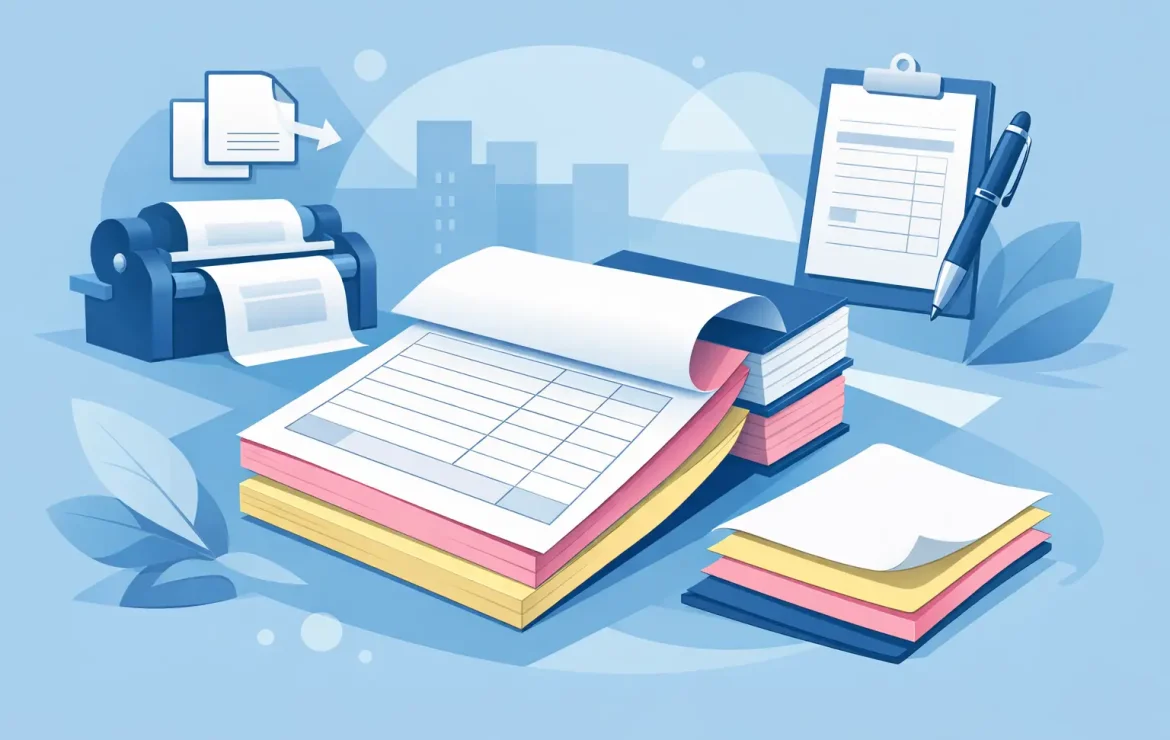
When your team is on site, at a counter or out making deliveries, paperwork still needs to work first time. That is why ncr invoice book printing remains a practical choice for businesses that need instant duplicate or triplicate records without faffing about with separate sheets, printers or messy carbon paper.
For plenty of firms, invoice books are not glamorous, but they are essential. Builders, engineers, garages, retailers, wholesalers, removals firms and service teams all rely on them to leave a clear record with the customer while keeping a matching copy for accounts. If the layout is confusing, the paper tears badly or the numbering is inconsistent, it creates more admin than it saves. Good print solves that.
What ncr invoice book printing actually means
NCR stands for no carbon required. Instead of using old-fashioned carbon sheets, the pressure from writing on the top page transfers the details onto the sheets underneath. That gives you clean duplicate or triplicate copies in one go.
In practice, ncr invoice book printing is about more than just putting your logo on a pad. You are creating a working document your staff will use every day. It needs to be easy to write on, simple to read, and durable enough to cope with vans, desks, counters and job sites. The best books feel straightforward from the first use, which usually means the design has been thought through before anything goes on press.
Why invoice books still make sense
A lot of businesses now use digital systems for quotes, invoicing and job tracking, and for some that is exactly right. But printed NCR books still earn their place because they are quick, reliable and easy to use anywhere.
If your staff work in locations with poor signal, move between customer sites or need signatures on the spot, an invoice book can be the fastest option. There is no battery to charge, no app to load and no risk of someone typing the wrong details into a tiny screen. You write once, tear out the customer copy and keep your own record. Job done.
They also suit businesses that need a simple audit trail. Numbered sets make it easier to track what has been issued, and a consistent format helps office teams process paperwork more quickly. That matters when you are handling a steady flow of transactions and want less back-and-forth between field staff and admin teams.
Choosing the right format for your business
The right NCR book depends on how your team works. Some businesses need a compact book that fits in a van door pocket. Others want A4 pages because they include itemised parts, labour, VAT and customer sign-off. There is no single best format, only the one that makes daily use easier.
Duplicate or triplicate?
Duplicate books are common where one copy goes to the customer and one stays with the business. Triplicate books suit jobs with more moving parts, such as when one copy is needed for accounts, one for the driver or engineer, and one for the client. If you are manually sharing paperwork between departments, the extra copy can save time. If not, it may simply add bulk.
Size matters more than people think
A5 is handy and portable, which makes it popular for mobile teams. A4 gives you more room for detailed descriptions, terms and branded information. Smaller books can look tidier in the hand, but if staff end up cramming notes into tiny boxes, the neat format becomes a problem. It is worth choosing based on the actual information you need to capture, not just what looks compact.
Bound books or loose sets?
Bound books are usually the better fit for day-to-day invoicing because they keep everything together and reduce the chance of lost sheets. Loose NCR sets can work well when different copies need to be routed quickly or filed in separate places. Again, it comes down to process. If your paperwork travels with the team, a proper book is often the safer option.
The details that make an invoice book easier to use
A well-printed book is only half the story. The layout has to support real working habits. That means thinking about what staff fill in most often, what customers need to see clearly and what your accounts team needs back at the office.
Start with the basics. Company name, contact details and branding should be present but not overpowering. An invoice book is a working document, not a glossy brochure. It should look professional, but the form fields matter more than decorative extras.
Then consider the flow of information. Customer name and address, job date, order number, description, quantity, price, VAT and total should be placed logically so users can move through the page without stopping to work out where to write next. If you regularly need signatures, purchase order references or vehicle registration numbers, build them in from the start rather than expecting staff to squeeze them into margins.
Numbering is another small detail with a big effect. Sequential numbering helps with record keeping, reduces confusion and makes it easier to cross-reference jobs or payments later. Perforation also matters. A clean tear makes the customer copy easy to remove while leaving the remaining set tidy and secure.
Why print quality matters on a working document
Because invoice books are practical items, some buyers assume any print will do. Usually, they notice the difference once a cheap book starts causing irritation.
If the paper is poor, copies can be faint or patchy. If the print registration is off, boxes and lines look messy. If the book is badly glued or weakly bound, pages can loosen before the book is finished. None of that helps a business look organised.
Good ncr invoice book printing gives you a form that feels dependable. Writing transfers properly between sheets. The text is sharp. The branding looks professional. The whole thing holds together through daily handling. It reflects better on your business, especially when the invoice is one of the last things a customer sees at the end of a job.
That is particularly important in trades and service sectors where paperwork often doubles as part of the customer experience. A clear, branded invoice can reinforce that your business is professional and well run. A flimsy, generic-looking book can do the opposite.
Common mistakes to avoid when ordering NCR books
One of the most common issues is overcomplicating the design. Trying to squeeze every possible field onto the page usually makes the form slower to complete. It is better to focus on what your team actually records every day.
Another mistake is choosing the wrong quantity or format based on guesswork. A business that uses books heavily may need a practical stock level and repeat ordering plan. One that only issues occasional handwritten invoices may be better off with a smaller run. Print should match usage, not sit in a cupboard for years while contact details or branding go out of date.
There is also the question of colour. Full-colour branding can look smart and help the document feel more polished, but not every invoice book needs lots of colour. Sometimes a simpler approach is the right balance between appearance and budget. It depends on how customer-facing the document is and how closely it represents your brand day to day.
A straightforward buying process matters too
Most businesses ordering invoice books are not looking for a print lesson. They want sensible advice, clear options and a finished product that does exactly what it should. That is why a straightforward service matters as much as the paper stock or binding method.
A good print partner should help you work out the right size, number of parts, numbering and layout without drowning you in jargon. If you already have artwork, the job should move along efficiently. If you need help refining the form, that should be easy too. Print by Volta supports both sides of that process, which is useful when you want the design and production handled in one place.
For repeat-use documents like invoice books, consistency is a big part of the value. Once you have the format right, reordering should be simple. The aim is to remove friction, not create another admin task.
When NCR invoice books are the right call
Not every business needs them. If all invoicing is centralised through software and your team never writes anything by hand, printed books may be unnecessary. But for mobile workforces, service visits, collections, deliveries and face-to-face transactions, they still make a lot of sense.
They are especially useful when speed and clarity matter more than digital bells and whistles. One written entry, multiple copies, clear records and no awkward workarounds. Sometimes the most effective tool is the one that keeps the job moving.
If you are reviewing your paperwork, it is worth treating invoice books as part of your wider customer experience, not just an office supply. When they are properly designed and well printed, they save time, reduce mistakes and help your business come across as organised from the first line to the final signature.
The best printed tools are often the quietest ones – the jobsheet, the order pad, the invoice book that simply works every time someone reaches for it.
Popular Posts

A Guide to Custom Sticker Printing for Business

What Is Uncoated Paper and When Should You Use It?

Ordering NCR Duplicate Sets Without Delays
Testimonials
We had some brochures printed – they were high quality and the delivery was right to our door and super speedy. The customer service was excellent and I would definitely use them again.

Causeway
Our friends at Print by Volta always do a cracking job and they are always friendly, helpful and full of ideas. And they are consistent year on year which is why we are still working with them!

LFBB Solicitors
Excellent print quality with a quick turnaround! The staff are very helpful and supportive. We will be sure to work with them again.

David Village Lighting

